The Evolution of Social Engineering: Enter ROMULUS
In the ever-shifting landscape of cybersecurity threats, the most dangerous vector remains human error. While automated exploit kits that target unpatched software vulnerabilities continue to pose a threat, threat actors are increasingly opting for social engineering techniques that bypass traditional security controls altogether. A prime example of this trend is the newly discovered malware distribution platform known as ROMULUS. Detailed in recent findings by cybersecurity investigators at Forescout Research - Vedere Labs, ROMULUS represents a turnkey, Malware-as-a-Service (MaaS) infrastructure designed specifically to operationalize and scale the notorious "ClickFix" social engineering tactic.
Unlike traditional phishing schemes that rely on malicious email attachments or direct executable downloads, ROMULUS leverages web-based deceptive frameworks. By generating highly convincing fake error messages on compromised or malicious landing pages, the service tricks users into manually copying and executing malicious command-line scripts. This approach effectively uses the victim's own administrative actions against them, allowing attackers to deliver sophisticated payloads like LegionLoader while bypassing browser-level safeguards and email security gateways.
As threat actors refine these tactics, understanding the operational mechanics of platforms like ROMULUS is critical for defenders. This platform is not merely an isolated campaign; it is a service model that democratizes advanced social engineering, making it accessible to low-level cybercriminals and sophisticated threat groups alike.
Unpacking the ClickFix Methodology
To understand why ROMULUS is so effective, one must first examine the ClickFix mechanism it automates. The ClickFix technique emerged as an evolution of traditional drive-by downloads. Historically, when a user visited a compromised website, the site would attempt to silently push an executable file or trigger a browser exploit. Over the past decade, however, modern web browsers have implemented robust sandboxing, strict content security policies, and aggressive download warnings that alert users to potentially dangerous files.
ClickFix subverts these technical barriers by shifting the attack vector from automated software exploits to guided human interaction. When a target lands on a malicious site controlled by ROMULUS, they are not greeted with an unexpected file download prompt. Instead, the page simulates a technical error—frequently mimicking standard system notifications from Google Chrome, Microsoft Windows, reCAPTCHA verification systems, or administrative software like Zoom or MS Teams.
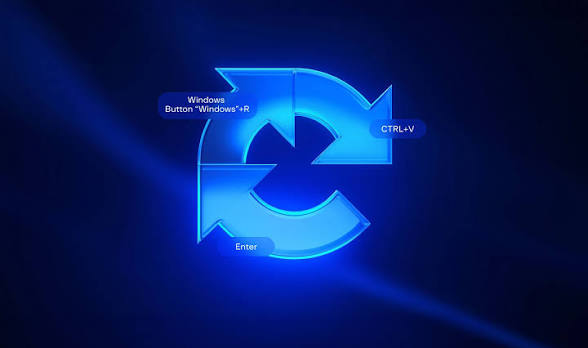
The user is informed that to resolve the issue, such as a corrupt browser update, a missing video codec, or a failed human verification check, they must perform a simple troubleshooting step. The landing page provides explicit instructions: open the Windows Run dialog box (or a PowerShell terminal) using a keyboard shortcut, paste a provided snippet of code, and press Enter.
Because the victim is manually pasting the command into their operating system's native command prompt, the browser's download protections are entirely avoided. The operating system trusts the user's manual input, executing the obfuscated script without triggering the usual security pop-ups associated with untrusted software downloads. ROMULUS automates the backend generation of these dynamic landing pages, tailored scripts, and tracking systems, allowing operators to deploy customized ClickFix campaigns in minutes.
Inside ROMULUS: Malware-as-a-Service Capabilities
The discovery of ROMULUS highlights how specialized the cybercrime underground has become. Rather than requiring individual threat actors to build their own deceptive websites, manage domain infrastructures, and write custom PowerShell loaders, ROMULUS provides a turnkey interface.
According to analysis from Vedere Labs, the ROMULUS platform functions as a centralized control hub. Subscribers to the service can choose from a library of pre-built, highly polished templates that spoof popular software brands and web services. The platform automatically generates obfuscated scripts—often combining PowerShell, MSHTA, or VBScript—that are customized to pull specific payloads from attacker-controlled repositories.
Key features observed in the ROMULUS ecosystem include:
- Dynamic Geo-Targeting and Fingerprinting: The landing pages inspect incoming traffic to determine the victim's geographic location, operating system, and browser version. If a user is visiting from a security research range or automated sandbox, the platform serves a benign page to avoid detection.
- Multi-Stage Script Obfuscation: The commands generated by ROMULUS use layered encoding techniques to evade Endpoint Detection and Response (EDR) solutions. The initial paste command typically executes a heavily obfuscated PowerShell script that retrieves a secondary payload from a remote server.
- Payload Flexibility: While recent campaigns associated with ROMULUS have primarily focused on distributing LegionLoader—a well-known malware loader capable of dropping info-stealers, ransomware, and remote access trojans (RATs)—the service itself is payload-agnostic. Operators can configure the platform to deliver virtually any executable or script.
- Analytics and Campaign Tracking: ROMULUS provides its customers with detailed dashboards showing click-through rates, successful executions, and host system information, treating cybercrime with the same metrics-driven rigor as legitimate digital marketing.
The Role of LegionLoader and Subsequent Threats
While ROMULUS acts as the delivery conduit, the primary payload observed in recent operations is LegionLoader (also known as Legion Loader). LegionLoader is a flexible, multi-stage dropper written in programming languages like C or C++ designed to establish persistence and deploy secondary malicious modules.
Once executed via the ClickFix PowerShell script, LegionLoader performs initial host reconnaissance. It gathers system metadata, checks for the presence of analysis tools or virtual machine environments, and attempts to disable security processes or add exclusions to Windows Defender. If the environment is deemed suitable, LegionLoader connects to its Command and Control (C2) server to fetch further instructions.
In typical deployments, LegionLoader is used to drop identity-stealing malware, such as Lumma Stealer, RedLine, or Raccoon Stealer. These tools harvest stored browser credentials, session cookies, cryptocurrency wallet keys, and multi-factor authentication tokens. In corporate environments, a successful LegionLoader infection can provide initial access brokers (IABs) with the credentials needed to pivot deeper into enterprise networks, setting the stage for domain compromise or enterprise-wide ransomware deployment.
Why ClickFix Tactics Pose a Unique Security Challenge
The emergence of platforms like ROMULUS underscores a fundamental challenge in modern cybersecurity defense: technical controls struggle against attacks that rely on legitimate administrative features operated by authorized users.
When a user manually opens the Windows Run prompt (Win + R), pastes a command, and hits Enter, they are invoking built-in system administration features. From the perspective of the operating system, these actions are intentional. While modern EDR solutions have begun monitoring command-line activity for suspicious PowerShell flags—such as -EncodedCommand or hidden window parameters—attackers behind ROMULUS continually iterate their obfuscation methods to blend in with legitimate administrative scripts.
Furthermore, the psychological conditioning built into the ClickFix design plays heavily on user urgency and technical familiarity. Most office workers and home users have encountered software glitches, driver errors, or web page loading failures. By presenting an interface that looks identical to a native system window or a familiar service, ROMULUS successfully exploits the user's desire to quickly resolve the issue and continue their work.
Mitigation Strategies for Organizations and Defenders
Defending against ROMULUS and the broader wave of ClickFix-driven attacks requires a combination of technical guardrails, endpoint monitoring, and targeted user education.
1. Restricting System Utility Usage
For corporate environments, restricting access to command-line interfaces for standard users is one of the most effective controls. Group Policy Objects (GPOs) and endpoint management tools can be configured to block access to the Windows Run prompt (cmd.exe) and PowerShell (powershell.exe) for non-administrative accounts. If employees do not require command-line tools for their daily duties, disabling these capabilities eliminates the primary execution mechanism used by ROMULUS.
2. Enhanced PowerShell Auditing and EDR Detection
Organizations should ensure comprehensive logging is enabled across all endpoints. Enabling PowerShell Script Block Logging (Event ID 4104) and Module Logging allows security teams and SIEM systems to inspect the actual code executed by PowerShell, regardless of initial obfuscation. Detection rules should be established to alert on unusual parent-child process relationships, such as web browsers spawning shell instances or clipboard data directly triggering command interpreters.
3. Modernizing Security Awareness Training
Traditional security awareness programs heavily emphasize spot-the-phish email exercises, such as inspecting sender addresses or looking for bad grammar. ClickFix tactics operate entirely within the browser during normal web navigation. Employee training must evolve to highlight the explicit risks of executing copied commands. Organizations should establish a strict policy: users must never copy and paste scripts or open command-line prompts based on instructions from a website.
4. Network-Level Domain Filtering and Threat Intelligence
Because ROMULUS relies on infrastructure to host its landing pages and deliver payloads, security teams should leverage dynamic threat intelligence feeds to block newly registered domains (NRDs) and known malicious IP addresses at the DNS or web proxy level. Integrating real-time web reputation filtering can prevent users from reaching ROMULUS landing pages before the ClickFix lure is displayed.
The Future of Social Engineering Platforms
The discovery of the ROMULUS platform signals that social engineering tactics are continuing to shift toward standardized, scalable service models. As web browsers and email filters become more adept at identifying traditional malicious links and attachments, attackers will invest heavily in methods that trick users into authorizing execution manually.
As tools like ROMULUS mature, security researchers expect threat actors to integrate generative AI to create even more convincing, localized, and context-aware error prompts. For defenders, the key to countering this evolution lies in removing reliance on human judgment for system-level execution, hardening endpoint configurations, and maintaining strict visibility over command-line activity across the enterprise network.